
Wires vs Words: How OpenAI AgentKit differs from Lyzr Agent Framework
Why Agents Win in the Long Game (and where n8n, AgentKit, LangChain/LangGraph, and Lyzr each shine)

Whenever OpenAI releases something, it becomes an event, even if they release something as simple as a popcorn. And one such popcorn release was AgentKit, a visual workflow builder that feels like it’s taking a direct swing at n8n. What was interesting was that even 24 hours before Dev Day, the screens were “leaked,” and a wave of Twitter and LinkedIn influencers started posting hot takes about how OpenAI was about to “kill n8n.” It looked like a PSYOP, to be honest. OpenAI’s marketing team is strong, Sam Altman knows what he’s doing, and it was very clear they were pushing their marketing muscle behind AgentKit rather than some of the other genuinely cool launches. Personally, I think ChatGPT’s ability to call apps inside ChatGPT is much cooler than AgentKit. But sure—if you want buzz, go after the popular PLG category and declare a killer.
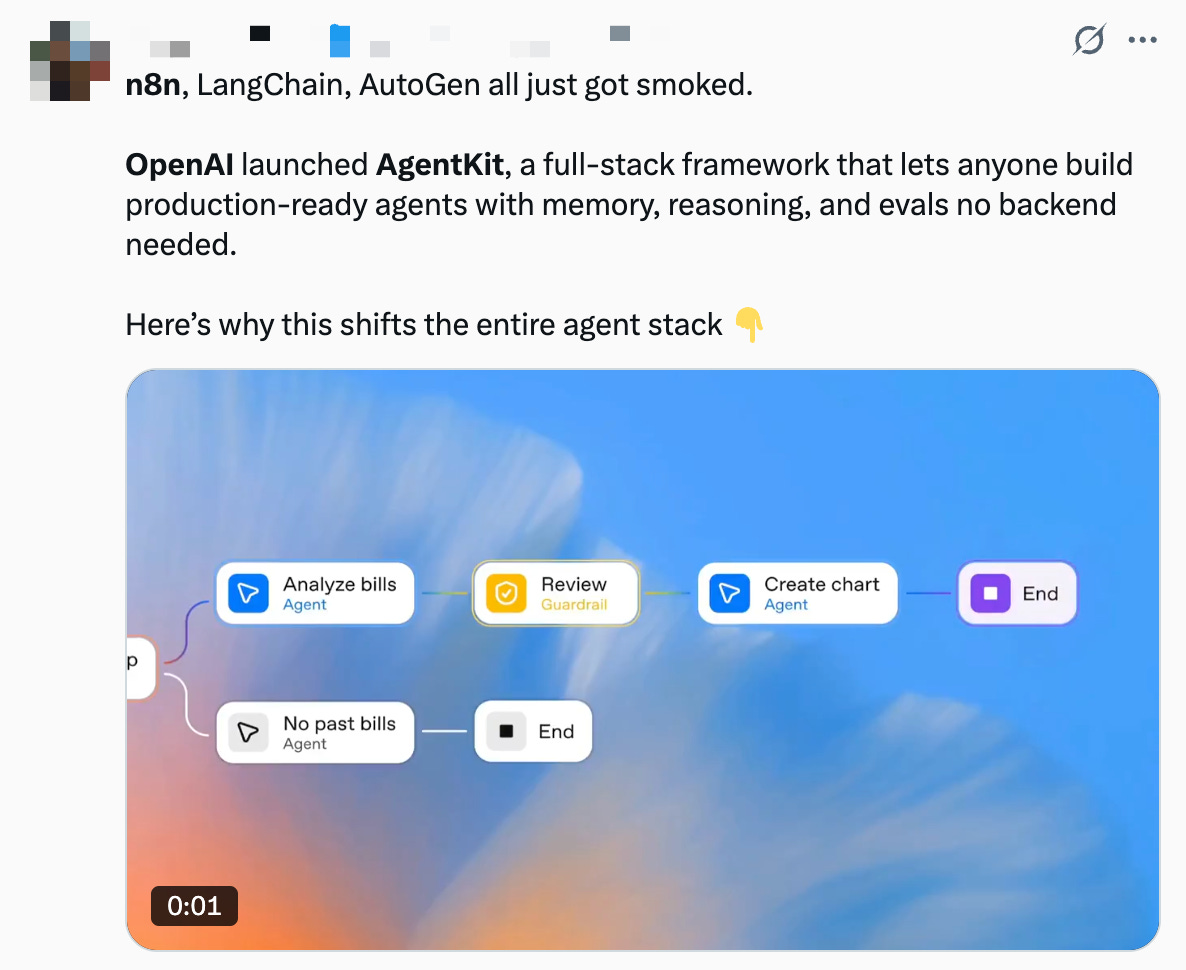
Here’s the thing, though. This entire “visual builder will eat agents” narrative misses the beat. I’m saying this after building 10,000+ agents for enterprise customers over the past two years.
First, credit where it’s due: where n8n and OpenAI AgentKit actually shine
On-ramps & quick wins. If you want to show an idea in an hour, wire a few triggers, fetch some data, push to Slack or email - n8n shines. It’s clean, it’s easy to follow, and for simple to medium flows it’s honestly delightful. Credit to the n8n team.
Business-friendly clarity. A stakeholder can see the path end-to-end. A box, an arrow, another box. For demos, alignment meetings, and “show me what will happen,” visual graphs are perfect.
AgentKit’s promise. AgentKit reduces the friction to try agent-y tasks if you’re already living inside OpenAI’s ecosystem. For folks who just want to click-and-go without stitching tooling, that’s attractive.
If your use case is lightweight automation, scheduled jobs, or a straightforward “if this then that then notify me,” visual builders are great. Use them. They earn their place.
But here’s the cognitive tax nobody talks about
The mental load of reviewing or maintaining visual flows grows non-linearly. A medium complexity n8n workflow easily hits ~50 nodes. That’s 50 decisions expressed as connectors, conditions, and edges you must hold in your head. If the original builder leaves, the next person is reconstructing the intent from a wiring diagram.
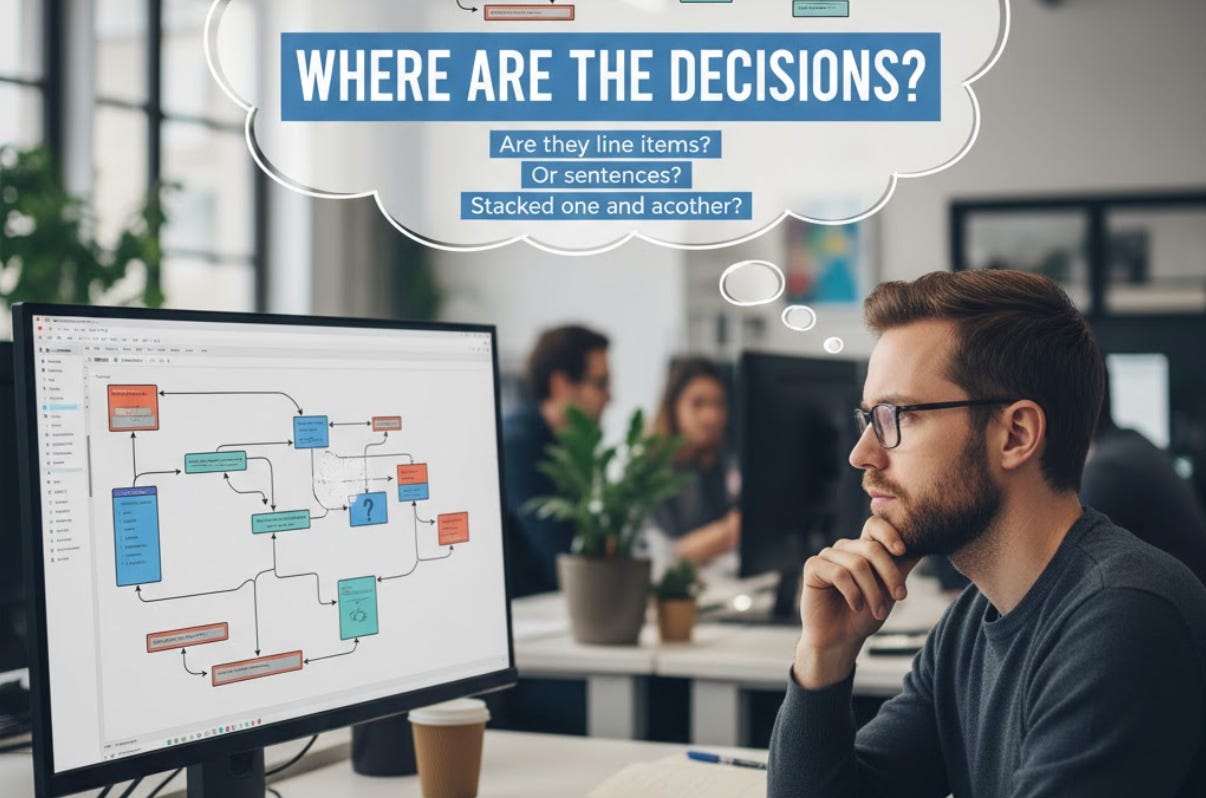
Visual graphs are UI for logic. Agents, by contrast, are language for logic.
When the core of your behavior is natural language—prompts + tools + policies—you can explain it, diff it, test it, and even ask another model to audit it. If I hand a complex agent spec to ChatGPT and say “decode the behavior and failure modes,” it can. Try that with a screenshot of a spaghetti graph. You’ll end up translating the graph back into English anyway. So why not start in English, and use visuals as a view, not the source of truth?
+1 to LangChain’s stance: complex ≠ visual
I really like what Harrison Chase said in his recent post: the most complex workflows are often solved with code, not visual workflow builders like n8n or AgentKit. I agree. He’s effectively speaking for the agent framework community - Lyzr, LangGraph (LangChain’s graph framework), CrewAI, LlamaIndex - anyone building serious orchestration. For medium to complex agentic workflows, a pure visual builder becomes hard to build, hard to debug, hard to understand, and it compounds workflow debt.
But here’s my nuance: it’s not that only code solves it. The real unlock is the framework - a true agentic runtime that handles state, handoffs, tool use, long-running tasks, supervision, and human-in-the-loop - and then lets you view or manipulate that behavior visually without making the diagram the source of truth.
The spectrum (and the squeeze)
Low complexity: no-code agents (prompt + tools) win.
Medium complexity: visual workflows are usable, but the cost rises fast.
High complexity: you need code and an agent framework (think LangGraph, Lyzr).
Visual builders are getting squeezed from both sides: simple agents are getting better, and complex systems want code. That’s the reality.
So where do agent frameworks shine? (LangGraph & Lyzr)
State & supervision. Manager/worker patterns, retriable steps, backoff, and recovery not as hacks, but as first-class concepts.
Handoffs & orchestration. One agent calling another, autonomy budgets, escalation paths, and structured interfaces between roles.
Human-in-the-loop done right. Approval gates, partial automation, and safe fallbacks.
Observability & testability. Traces, incident replay, deterministic sims, and golden-set evals you can run in CI.
LangGraph is fantastic when you’re code-first and want explicit graph control inside the LangChain ecosystem. If you’re a developer who loves the purity of code and wants to manage branching, memory, and tools explicitly - LangGraph shines.
How Lyzr takes it the last mile: production-grade ADLC, without the rewrites
Where teams stumble is not the prototype - it’s the promotion. Getting from “cool demo” to production across environments, policies, audits, and people is where the bodies are buried. Lyzr was built to make that the default path, not an uphill battle.
Lyzr’s Full-Stack Agent Development Lifecycle (ADLC)
Prototype → Pilot → Production as a first-class pipeline, not a slide.
Agent evals out of the box: assertions, golden sets, hallucination checks, regression thresholds. Promotion is gated by metrics, not vibes.
Responsible AI guardrails: PII policies, domain whitelists, autonomy limits, brand voice, and compliance packs you can toggle on day one.
Observability & replay: trace every tool call, reproduce incidents, diff prompts and policies between versions.
“Lovable-like” App Builder experience
You can go from agent spec to a shareable app in minutes - think Lovable-like ergonomics - without losing the ability to harden that same agent into a governed service. Business gets the “click and try” speed; engineering gets the “lock it down and ship” discipline.
Visual where it helps, code where it counts (no rewrites)
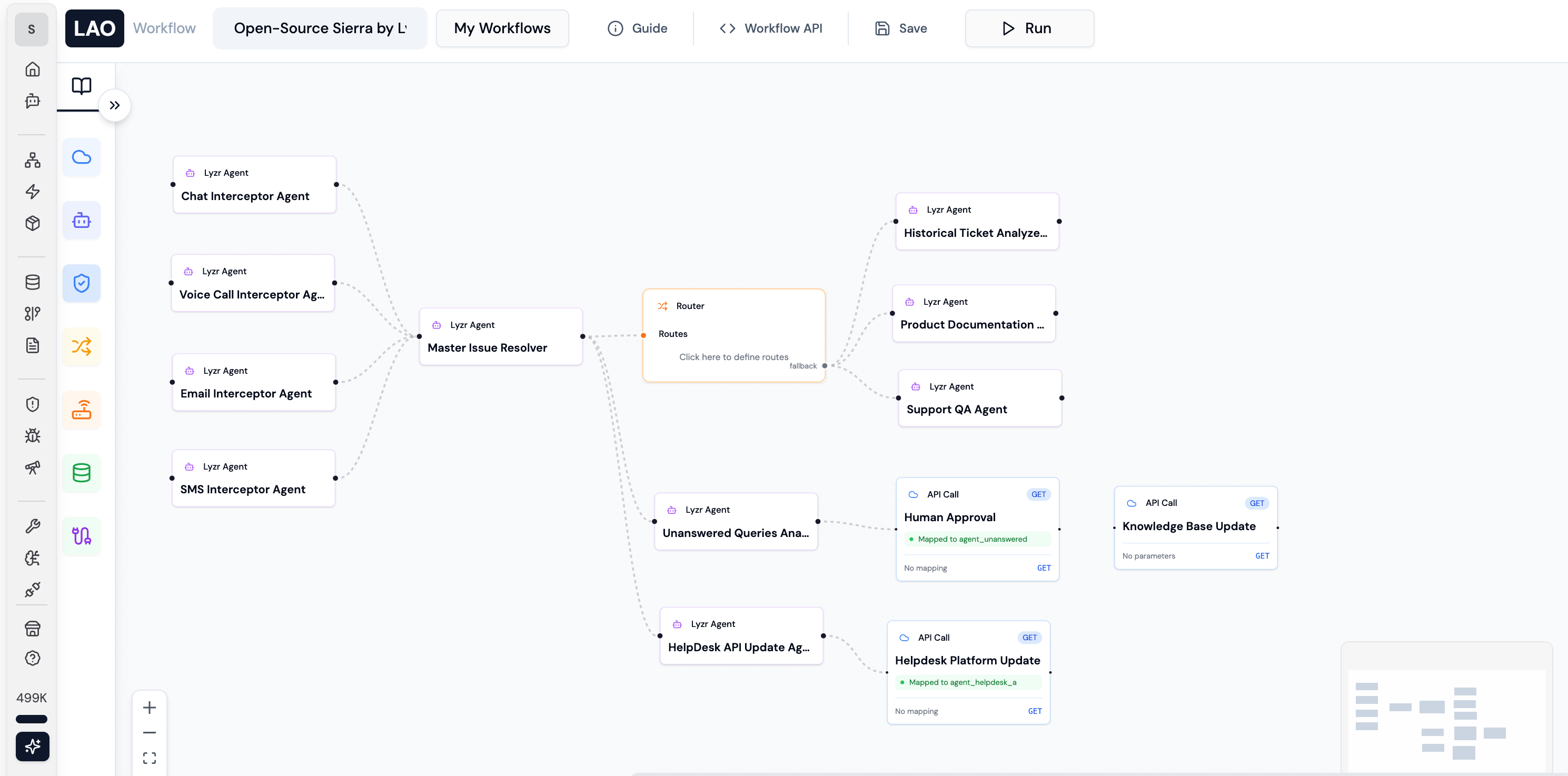
Lyzr’s Agent Studio gives you a clean visual to inspect agent behavior - handoffs, memory hops, tool calls - without forcing the diagram to be the master. Flip a switch to dev mode and you’re in code. Change something in code, come back to Studio, and the view stays in sync. Round-trip editing means no one throws work away as complexity grows.
Model freedom (no lock-in)
AgentKit is great for OpenAI-centric teams, but it locks you to one model family. Lyzr is model-agnostic by design: swap GPTs, Claude, Gemini, Mistral, or local LLMs based on cost, latency, or privacy needs - per agent, even per step.
Run anywhere
Everything can run in your own cloud (VPC) or on-prem. Secrets stay yours. Data never leaves your boundary. That’s table-stakes for enterprises, and it’s built into Lyzr.
The practical matrix (how different teams actually work in Lyzr)
Business teams: Build a single agent with rich instructions (yes, pages of prompt if needed), swap models, test quickly, and launch as an app instantly.
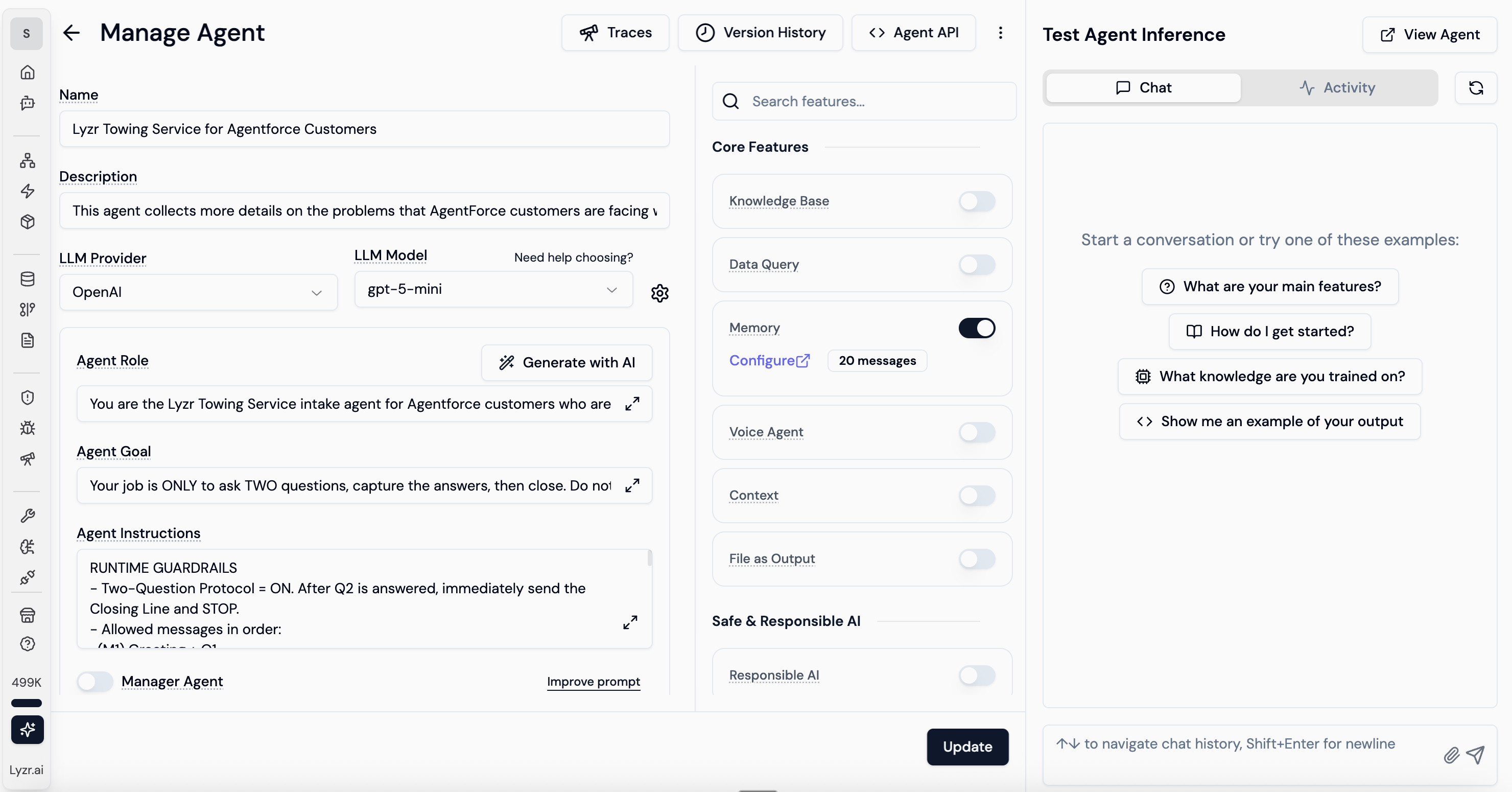
Enterprise developers (under guardrails): Still build no-code/low-code if they want, but ship behind APIs, with RBAC, policy packs, hallucination management, and knowledge integrations. and test them out thoroughly with thousands of simulations. Deploy to Slack/Teams or embed into existing systems safely.
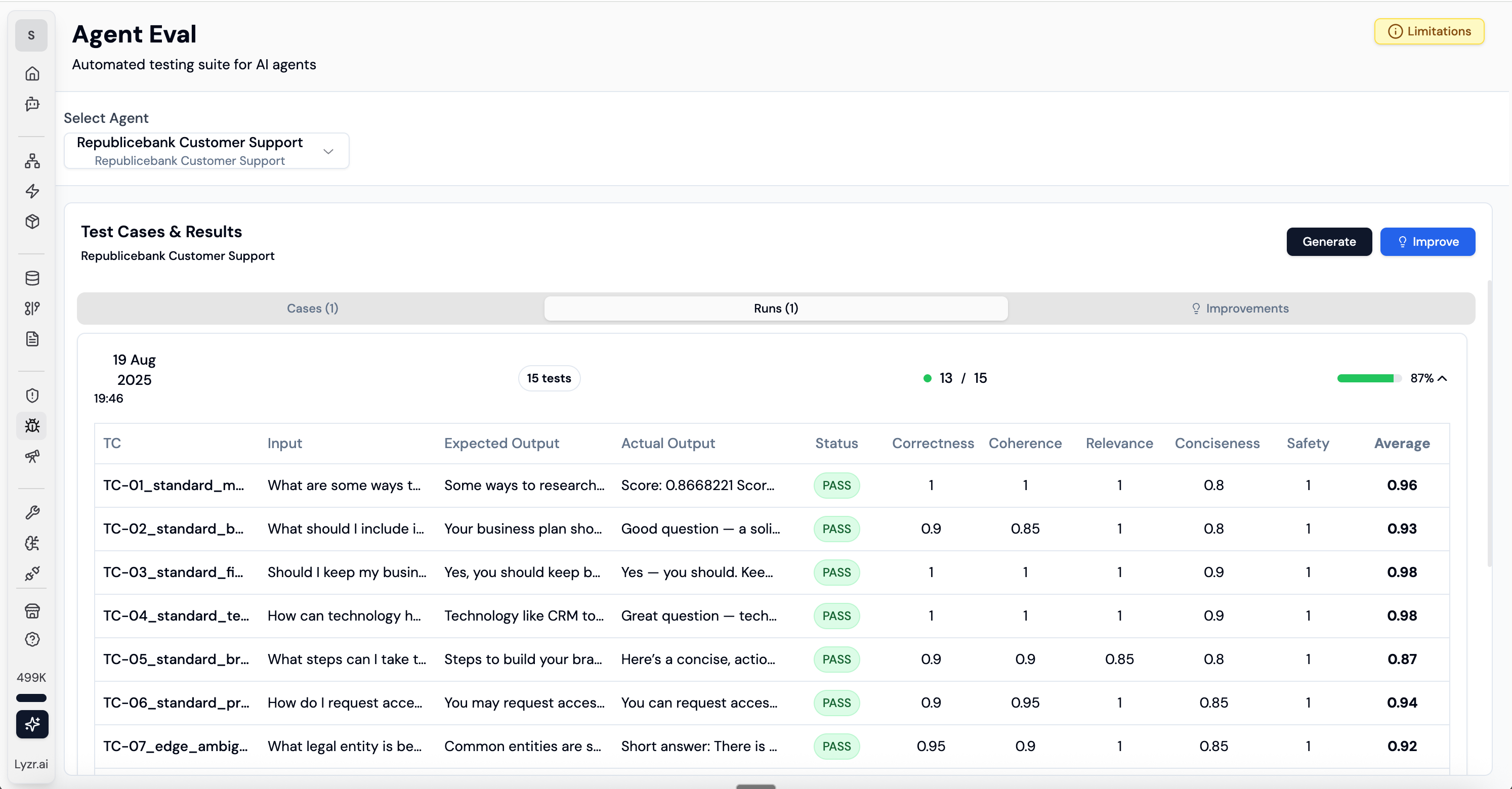
Professional developers: Click Dev Mode, go straight to code and the SDK. Compose agents, extend tools, wire CI, and treat agents like real software—because they are.
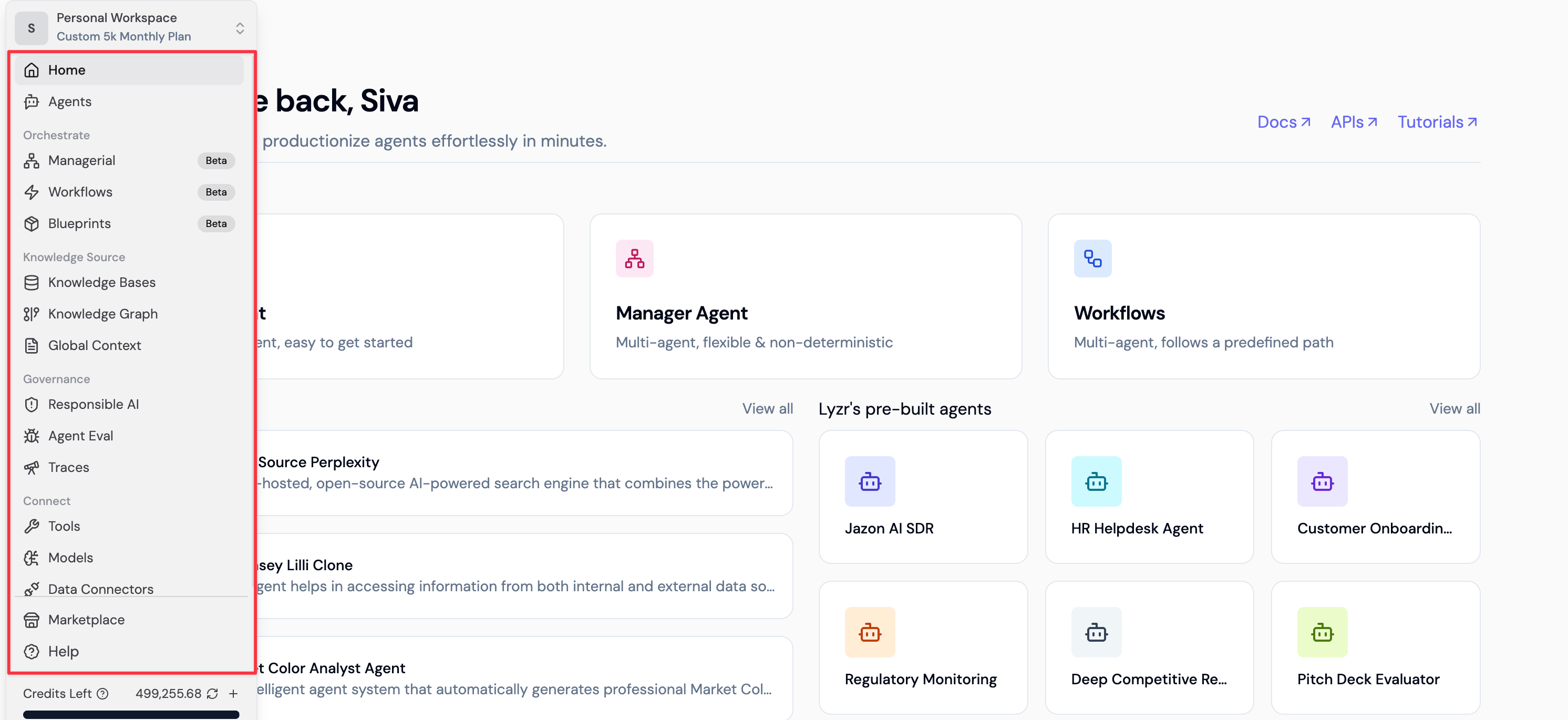
All three operate in one place—Lyzr—so you don’t fracture your agentic intelligence across random tools. If business is on Copilot, devs are on LangGraph, and IT is on something else, your organizational memory and policies splinter. Lyzr keeps the central nervous system (OGI) intact while letting each persona work the way they like.
Where this leaves n8n, AgentKit, LangChain/LangGraph - and you
n8n: Great for quick, legible automations and stakeholder alignment. Keep using it where it fits.
AgentKit: A smooth on-ramp inside the OpenAI world. If you’re all-in on OpenAI and happy with that, it’s fine.
LangGraph (LangChain): Excellent for code-level control of complex agent graphs. If you live in Python/TypeScript and want precision, it’s a solid choice.
Lyzr: The production bridge - from prototype to governed, observable, model-agnostic, enterprise-grade agents - without rewrites. Visual when you want it, code when you need it, ADLC and evals as product, not process.
OpenAI will keep going after top PLG categories. That’s their lane and they’re very, very good at it. But enterprises aren’t buying stunts - they’re buying systems. If you want agents that actually make it to production - with evals, guardrails, observability, and freedom to choose models - you need a full-stack agent platform that respects the entire lifecycle and the realities of your infra.
That’s why we built Lyzr. Start simple. Scale to complex. Promote with confidence. And run it all on your turf.
-Siva